Port Canaveral, 1953 to today : channel, port, cruise mega-hub
The Canaveral Port Authority opened the dredged channel in 1953 as a military supply port. Seventy years later it's the second-busiest cruise port in the world.
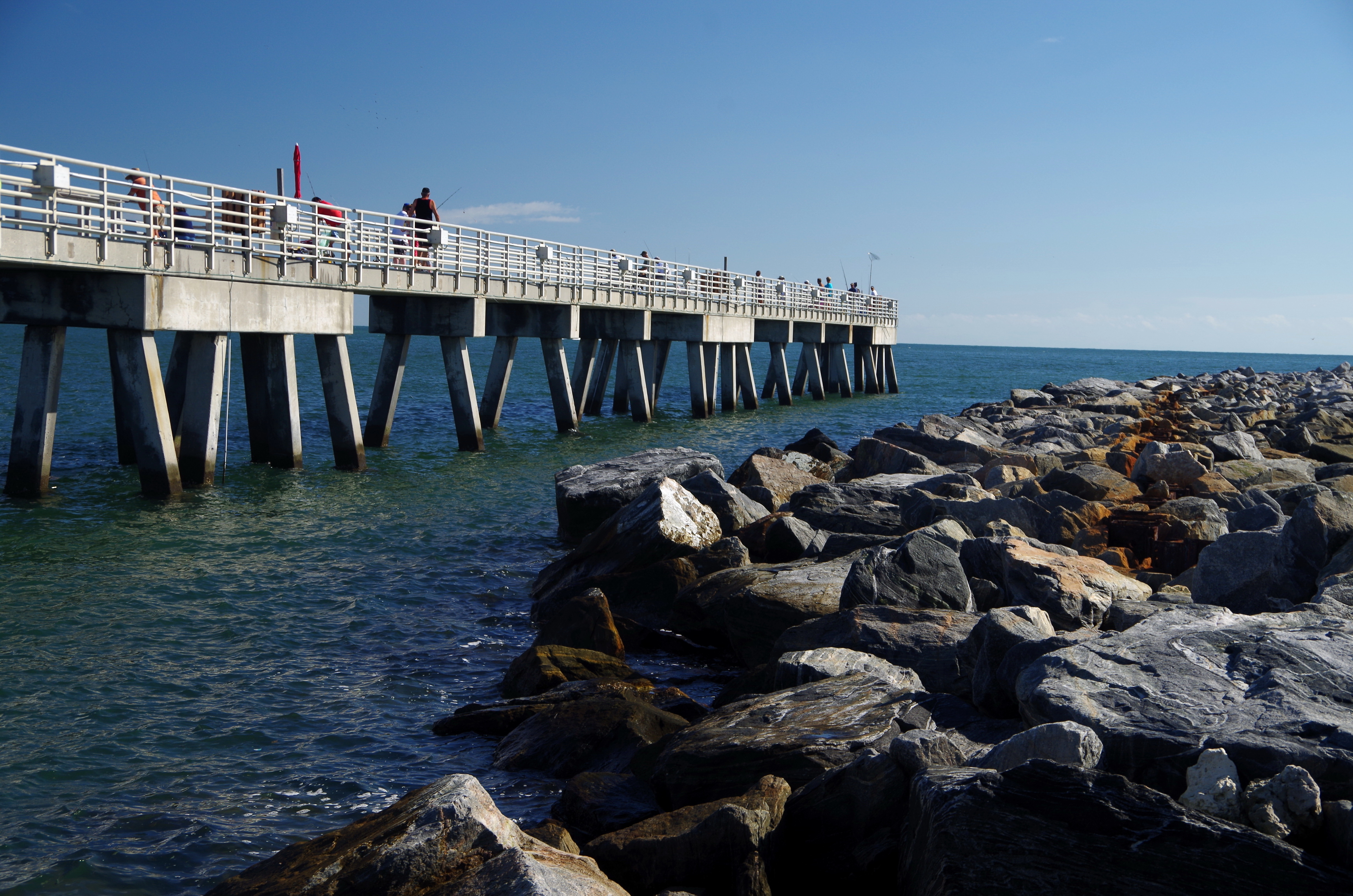
The Canaveral Port Authority opened the Port Canaveral channel on November 4, 1953, with the first deep-water vessel (USS PCE-901) entering the dredged inlet. The port had been authorized as a federal navigation project in 1948, dredged by the Army Corps of Engineers between 1951 and 1953, and managed since 1939 by the Canaveral Port Authority, a special-purpose Florida district. The port’s original mission was military: supporting the Navy’s Banana River station and (after 1949) the Air Force’s missile range. The cruise industry arrived in the 1980s and grew steadily. By 2026, Port Canaveral handles roughly 6 million cruise passengers annually, making it the second-busiest cruise port in the world behind PortMiami.
The 1939 authorization
The Florida Legislature created the Canaveral Port District in 1939 under Chapter 28401, a special act of the state legislature. The district covered most of Brevard County and was authorized to plan, finance, and operate a deep-water port at the cape.
The Port Authority struggled for a decade with limited federal support and minimal local funding. World War II diverted federal attention. The state-level enabling act was technically active but operationally dormant.
The change came after the war. The 1948 Rivers and Harbors Act authorized federal funding for the Port Canaveral channel as a navigation project. The dredging was justified primarily on military grounds: the cape’s new role as the Joint Long Range Proving Ground (designated 1949) required port access for fuel, propellant, and heavy equipment delivery. The Army Corps of Engineers contracted the dredging in 1951.
The channel
The original channel was 30 feet deep and 400 feet wide at the bottom, with a turning basin of 1,000 by 1,500 feet. The channel ran 1.5 miles from the Atlantic into the basin on the west side, with the lock system separating the saltwater channel from the freshwater Banana River.
Two factors made the dredging non-trivial. First, the cape’s offshore shoals required the channel to be cut through hard limestone in places. Second, the Atlantic surf shifted dredged spoil back into the channel constantly. The 1953 opening was provisional. The channel required continuous re-dredging through the 1950s to maintain operational depth.
The channel has been deepened twice since 1953: to 36 feet in 1981, and to 44 feet in 2014. The 2014 deepening was specifically funded to accommodate larger cruise ships (Oasis-class Royal Caribbean vessels need 40-foot minimum depth). The Army Corps of Engineers maintains the channel under ongoing federal navigation appropriations.
Military traffic, 1953 to 1980s
For the first three decades, Port Canaveral was primarily a military port. The Air Force and Navy used the channel for fuel barges, heavy cargo, and missile-component delivery to the cape. The fuel infrastructure was particularly important: solid rocket booster propellant, hypergolic propellants, and (later) liquid hydrogen all came by ship.
Civilian cargo was minimal. There was no significant container traffic, no general cargo handling, no break-bulk operations to compete with PortMiami or Port Everglades. The port was a single-purpose facility supporting the launch range.
Cruise traffic started small. The SS Volendam called at Port Canaveral in 1969 as the first cruise visit. Through the 1970s, occasional Caribbean cruises used the port. The cruise industry was not yet a significant business.
The cruise boom, 1981 to 2010
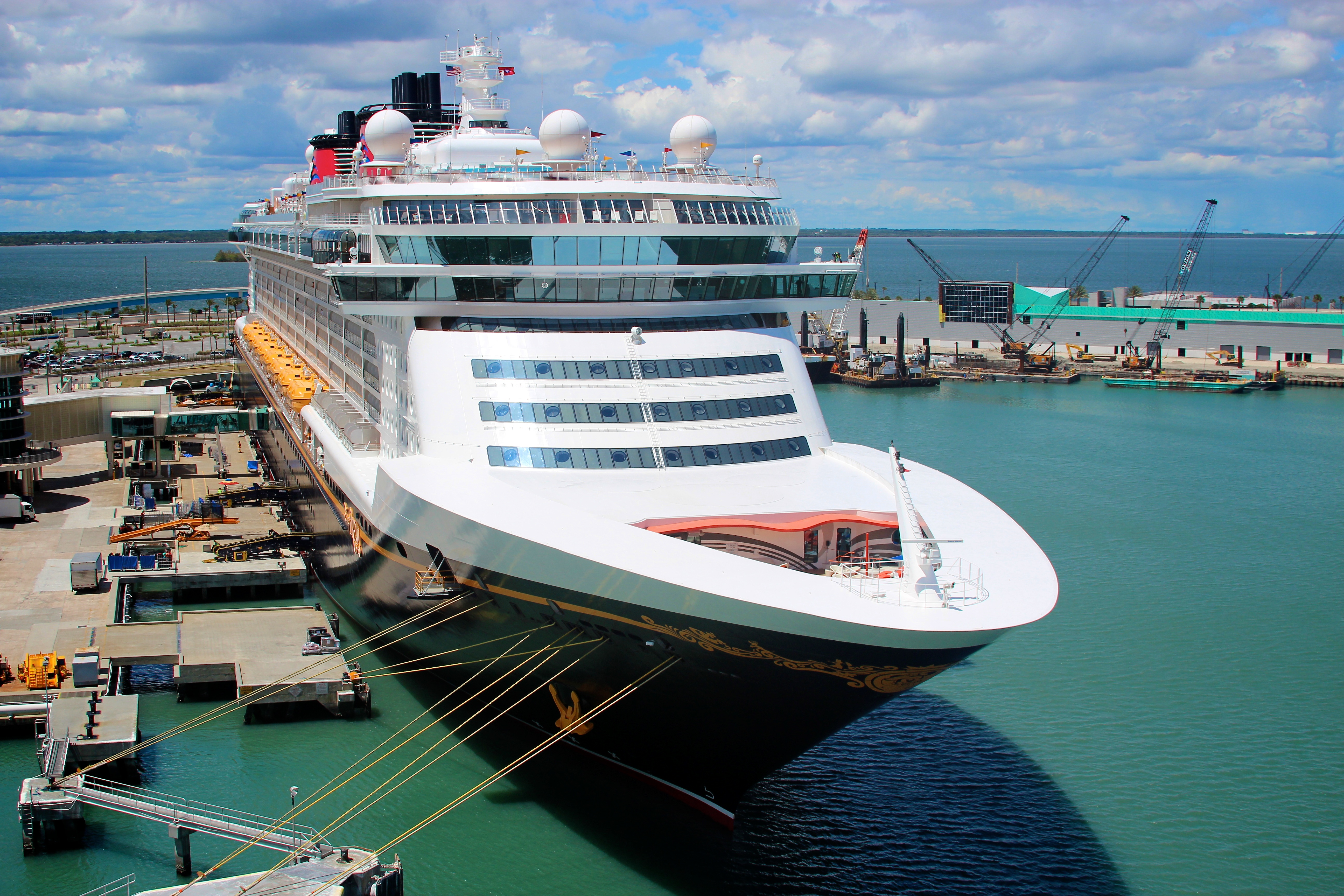
Three events changed the cruise picture. Premier Cruise Line opened a Disney-themed cruise operation at Port Canaveral in 1984, using a refurbished ship called The Royale. The operation was successful and demonstrated demand. Carnival Cruise Line opened year-round operations at the port in 1990. Disney Cruise Line, anticipating the new Walt Disney World demand pattern, opened the Disney Magic homeport at Canaveral in 1998.
The port’s cruise growth was steady through the 1990s and accelerated after 2000. Passenger counts:
- 1990: about 300,000 annual cruise passengers
- 2000: about 2.1 million
- 2010: about 4.0 million
- 2019 (pre-pandemic): about 4.6 million
- 2023 (post-pandemic recovery): about 5.7 million
- 2025: about 6.0 million
The port built terminal infrastructure to match: Terminal 1 (Disney) opened in 1998, Terminals 5, 6, 8, and 10 opened progressively through the 2000s. Terminal 3, the newest, opened in 2020 with capacity for Oasis-class vessels.
The cargo segment
While cruise gets the attention, Port Canaveral also operates a substantial cargo business. The port handles about 1.5 million tons of cargo annually as of 2025, primarily:
- Petroleum and petroleum products (mostly jet fuel for cape launch operations and regional airports)
- Cement and aggregate for Florida construction
- Roll-on roll-off vehicle traffic
- Refrigerated cargo (citrus, seafood)
The cargo segment is small compared to PortMiami or JaxPort but is profitable and stable. The port’s strategic plan through 2030 anticipates continued cargo growth.
The Port Authority structure
The Canaveral Port Authority is a special-purpose district under Florida law, governed by a five-member elected board of commissioners. The board is elected by Brevard County voters and serves staggered four-year terms.
The Port Authority operates as a self-supporting enterprise. It receives no Brevard County property tax revenue. Operating revenue comes from cruise passenger fees, cargo fees, parking, leases (the cruise terminals are Port Authority-built but leased to the cruise lines), and tenant revenue.
The Port Authority’s 2024 budget was approximately $145 million in operating revenue. The largest single revenue source is parking, followed by cruise terminal leases and passenger fees.
What Port Canaveral means to the cape
The port has gradually become the cape’s largest civilian employer and a major regional economic engine. As of 2024:
- Direct port employment: about 2,800 jobs
- Total economic activity (direct, indirect, induced): approximately $5.5 billion annually in Brevard County
- Tourism impact (cruise passengers spending pre-cruise and post-cruise locally): about $400 million annually
This shifts the cape’s economic base. The launch industry (NASA, SpaceX, Blue Origin, USAF) is still important but no longer dominant. The cruise industry, which barely existed at the cape in 1980, is now arguably more economically important than spaceflight to the local community.
The two industries coexist. The same channel that delivers liquid hydrogen for cape launches also handles the Oasis of the Seas leaving for the Caribbean. The same regional airport (Orlando-Melbourne and increasingly Daytona Beach) supports both segments. The cape is a port and a launch range, and both functions are now mature.
The future
Port Canaveral’s 2030 master plan anticipates:
- A seventh cruise terminal (Terminal 4, planned for 2027)
- Channel deepening to 47 feet (planned for 2028)
- Expanded cargo handling (a new RORO ramp planned for 2026)
- Workforce growth of about 30 percent over current 2,800 direct jobs
The cape’s port is, in 2026, a more dominant economic engine than the cape’s launch facilities. That was not true in 1980. It will be more true by 2030. The dredged channel built for missiles 73 years ago now mostly serves cruise tourists, and the tourist economy substantially exceeds the missile economy.
That inversion is one of the cape’s quieter big stories.
Further Reading
As an Amazon Associate we earn from qualifying purchases.