The cruise port boom : Carnival, Disney, Royal Caribbean, 1990 to 2020
How Port Canaveral went from 300,000 annual cruise passengers in 1990 to 6 million by 2025. Three cruise lines, three decades, one fundamental change to Brevard County's economy.
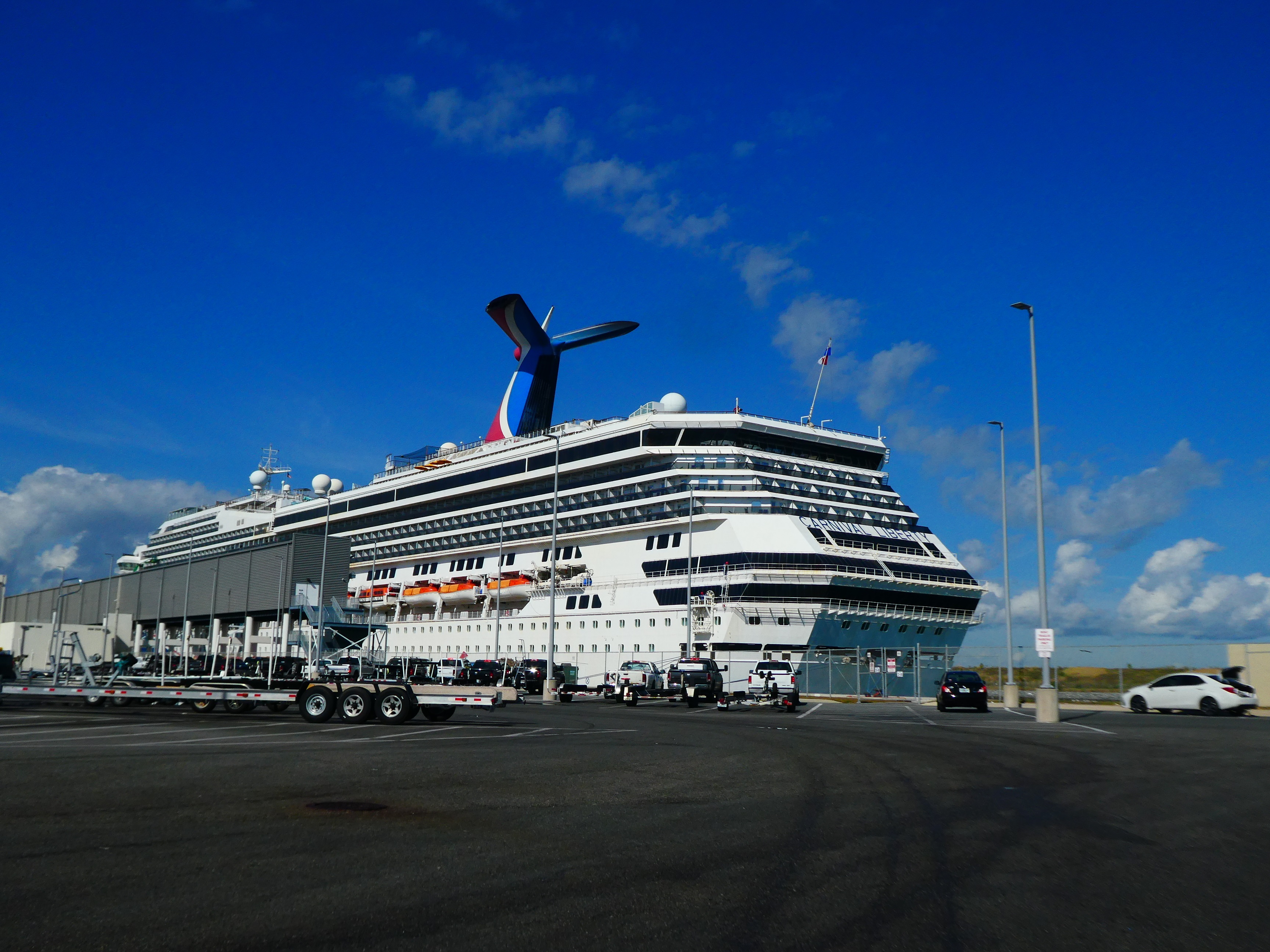
Port Canaveral’s transformation from a 300,000-passenger regional port into a 6-million-passenger global cruise hub happened in three waves. The first wave was Premier Cruise Line, which opened a Disney-themed operation at the port in 1984 using the refurbished SS Royale. The second wave was Carnival Cruise Line, which opened year-round Florida operations at Canaveral in 1990 with the Carnival Holiday. The third wave was Disney Cruise Line’s 1998 Canaveral homeport for the new Disney Magic and Disney Wonder, designed specifically for the Walt Disney World tourist pattern. By 2010, Port Canaveral was the third-busiest cruise port in the world. By 2020, it was second behind only PortMiami.
What Premier did
The Premier Cruise Line operation was the first to recognize that Port Canaveral’s location (close to Walt Disney World, with easy Orlando airport access, on a deepwater Atlantic channel) was specifically valuable for cruise rather than just military supply. Premier signed a licensing agreement with Disney to run themed cruises featuring Disney characters as onboard entertainment. The model was simple: book a 3- or 4-day Bahamas cruise, end at Port Canaveral, drive 50 minutes to Walt Disney World for the second half of a Florida vacation.
The cruise-plus-Disney package sold strongly. Premier added the SS Oceanic in 1985 and grew passenger volumes through the late 1980s. The company eventually filed bankruptcy in 2000 after losing the Disney license to Disney Cruise Line. But the demand template Premier proved was the foundation for everything that followed.
Carnival arrives
Carnival Cruise Line opened year-round Canaveral operations on November 17, 1990, with the Carnival Holiday running 3- and 4-day Bahamas itineraries. The ship displaced about 47,000 gross tons and carried about 1,500 passengers per cruise, which was modest by current standards but substantial in 1990.
Carnival’s Canaveral operation grew steadily: Carnival Fascination joined in 1996, Carnival Sensation in 1998, Carnival Glory in 2003, Carnival Liberty in 2005. By 2010, Carnival operated four ships year-round at Canaveral and was carrying roughly 1.4 million passengers annually through the port.
Carnival’s cruise products were aggressively mid-market. The 3-day and 4-day Bahamas cruises sold for $200-$400 per person and carried passengers Carnival described internally as “first-time cruisers” or “value-seeking families.” This was different from the longer, more expensive Caribbean cruises operated out of PortMiami or Port Everglades.
Disney Cruise Line
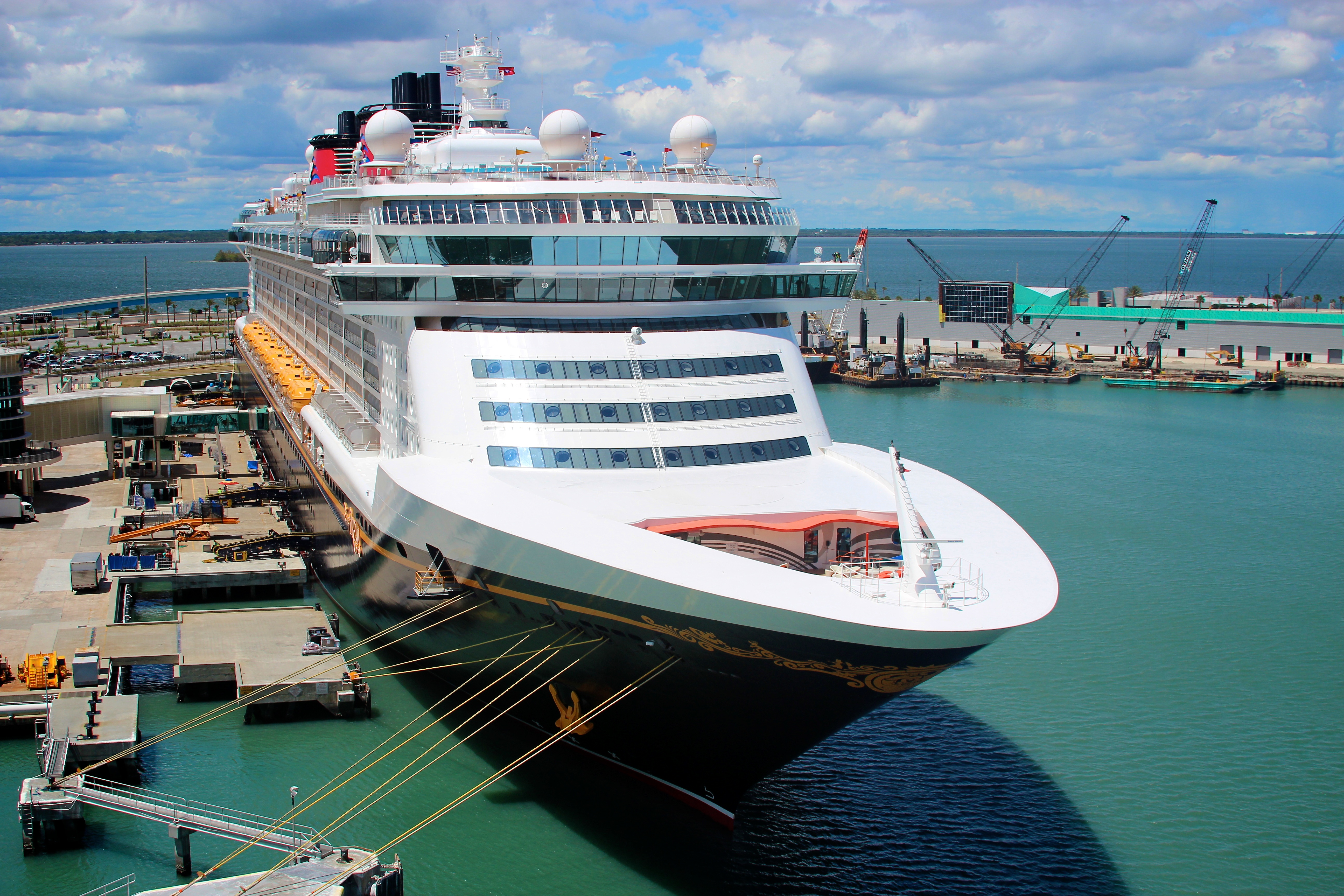
Disney Cruise Line opened at Port Canaveral on July 30, 1998, with the Disney Magic’s first cruise. The Disney Wonder followed in 1999. Both ships were purpose-built for Disney by Fincantieri’s Italian shipyards, designed specifically for the Disney brand and for 3- and 4-day Bahamas itineraries.
Disney’s operation was different from Carnival’s in two important ways. First, it was pure family marketing. Every Disney cruise was sold as part of a Disney vacation package that almost always included Walt Disney World, with Disney handling the cruise-to-park logistics. Second, the ships were Disney-themed throughout: Mickey Mouse references, character meet-and-greets, Disney-licensed entertainment.
Disney’s terminal at Port Canaveral (Terminal 1) was custom-built for Disney’s specifications. The terminal includes Mickey Mouse motifs in the architecture, a giant Mickey statue at the entrance, and porter staff trained in Disney’s specific service standards.
Disney’s Canaveral fleet has grown over time. The Disney Dream joined in 2011. The Disney Fantasy in 2012. The Disney Wish in 2022. By 2025, Disney was operating four ships out of Canaveral year-round, carrying approximately 1.2 million passengers annually.
Royal Caribbean and the others
Royal Caribbean was the third major arrival. The line operated occasional Canaveral cruises through the 1990s but didn’t establish a major year-round presence until 2005, when Mariner of the Seas began running 4-night Bahamas cruises from the port. Royal Caribbean’s Canaveral presence grew gradually: by 2025, the line was running Allure of the Seas (Oasis class, the largest cruise ships in the world) year-round at Canaveral, with about 800,000 passengers annually.
Smaller lines also use Canaveral: Norwegian Cruise Line operates the Norwegian Sun seasonally, MSC Cruises operates two ships year-round, and several smaller premium operators (Crystal, Viking) make occasional calls.
The Walt Disney World effect
The single biggest reason Port Canaveral works as a cruise port is Walt Disney World. The theme park complex is about 50 miles west of the port and draws roughly 50 million visitors annually. A significant fraction of those visitors are interested in extending the Disney trip with a cruise, particularly the Bahamas cruises Canaveral specializes in.
The cruise-park combination is so strong that Disney built corporate infrastructure around it: a Disney-operated motorcoach service between Walt Disney World and Port Canaveral, a Disney Cruise Line terminal at Walt Disney World where passengers check in before bus transfer, packaged Disney Cruise Line + Walt Disney World vacation deals.
Carnival, Royal Caribbean, and other operators also lean on the Disney connection, marketing to potential cruise passengers as “extend your Disney vacation” packages.
Pandemic disruption
The COVID-19 pandemic shut Canaveral’s cruise operations down completely on March 14, 2020. The US Centers for Disease Control issued a no-sail order in March 2020 that wasn’t fully lifted until October 2021. The port’s cruise revenue effectively collapsed to zero for 18 months.
The recovery has been remarkably fast. Cruise calls resumed in June 2021 with significantly limited capacity. By 2022, capacity had returned to 80 percent of pre-pandemic levels. By 2024, capacity exceeded pre-pandemic levels. Port Canaveral’s 2024 passenger count of approximately 5.9 million exceeded the 2019 peak.
The pandemic accelerated some structural changes. Smaller older ships were retired. Newer, larger ships were deployed. The port’s terminal infrastructure was modernized during the slow period. The cruise industry that emerged from 2021 is, in some ways, more efficient than the one that existed in 2019.
The economic impact
The Cruise Lines International Association estimates Port Canaveral cruise operations contribute roughly $5.5 billion annually to Brevard County’s economy as of 2024. The figure includes:
- Direct port employment: about 2,800 jobs
- Cruise line direct employment in Brevard County: about 1,200 jobs
- Tourism spending (passengers spending before and after cruises): about $400 million annually
- Indirect and induced economic activity: about $2.5 billion annually
The total is larger than NASA’s contribution to Brevard County in any single year except the peak Apollo years. For most years since 1985, the cruise industry has been a larger Brevard economic input than the space industry. This continues to surprise people who think of the cape as primarily a launch facility.
The future
Port Canaveral’s master plan anticipates:
- Continued cruise growth, with passenger counts reaching 7.5 million by 2030
- A new Terminal 4 (planned for 2027)
- Channel deepening to 47 feet (planned for 2028) to accommodate larger ships
- Continued workforce expansion
The cruise industry will continue to dominate the port’s economics. The cargo segment will remain a smaller secondary business. The military and launch-support segments will be the smallest of the three, even though they were the port’s original purpose.
This inversion of Port Canaveral’s original mission is one of the cape’s quiet big stories. The military supply port became a cruise mega-hub. The cape’s economy is now tourism more than missiles.
The cape that was bought from the citrus farmers in 1949 to support rocket testing now hosts more vacation cruises than rocket launches per year.
Further Reading
As an Amazon Associate we earn from qualifying purchases.