The Cocoa Beach Pier era : where astronauts and surfers ate
The Cocoa Beach Pier opened in 1962 and became the de facto astronaut canteen, surfer hangout, and tourist landmark of the Apollo era. The Cape was the workplace. The pier was the off-hours.
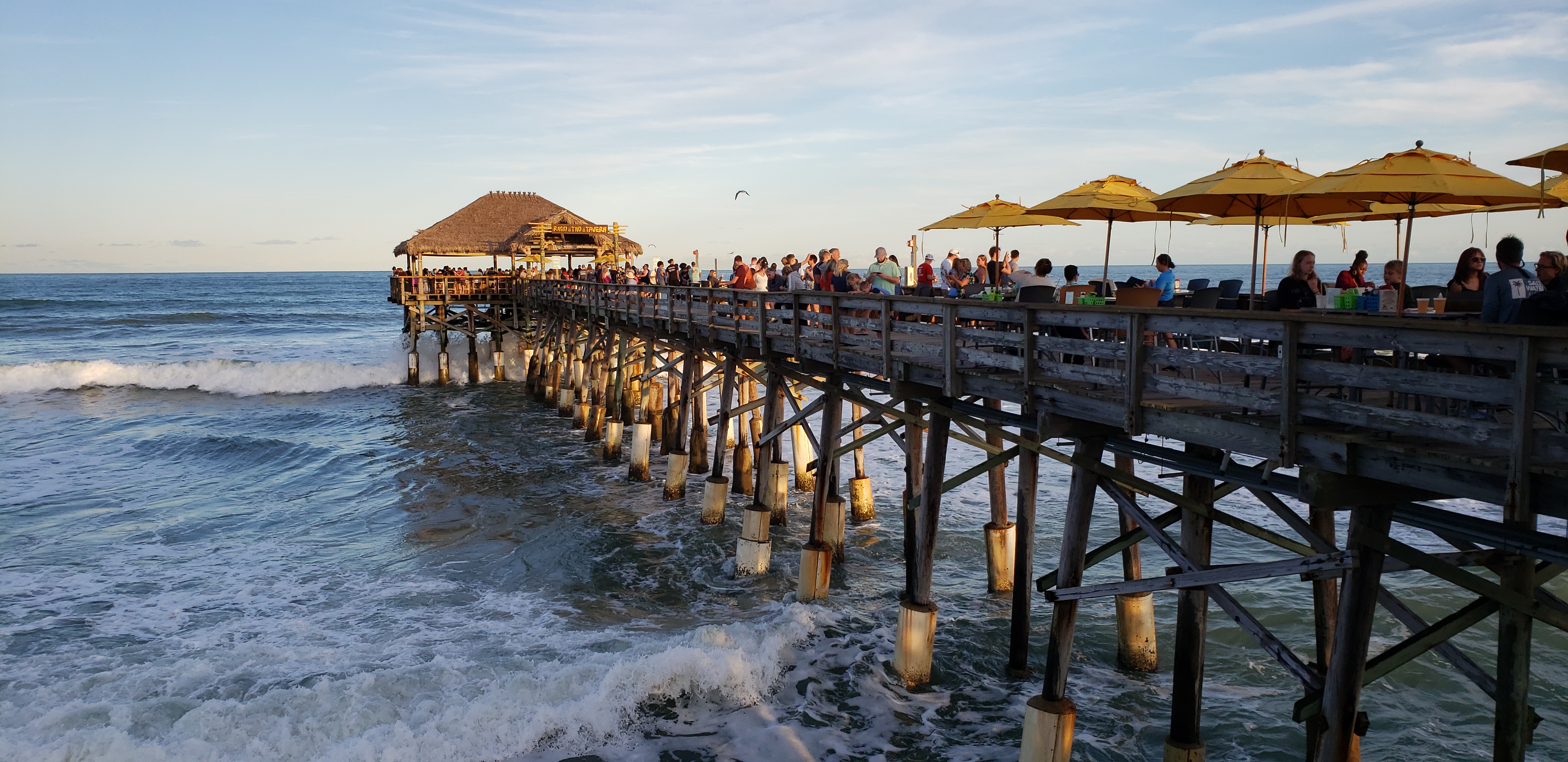
The Cocoa Beach Pier opened on July 1, 1962, on a 800-foot wooden structure extending into the Atlantic immediately south of Cocoa Beach proper. The pier rapidly became the social center of the cape’s space-program workforce: NASA astronauts ate there, contractors drank there, surfers occupied the south side, and visiting reporters used the pier bar as a backup press room when official briefings ran dry. The pier survived hurricanes, three ownership changes, and the post-Apollo population decline. It is still open in 2026.
The 1962 opening
Walter Jamieson, a former petroleum-industry engineer who had moved to Cocoa Beach in 1957, built the pier under a Florida Department of Natural Resources lease. The construction took 14 months and cost about $850,000 in 1962 dollars. The pier opened with a beach bar, a seafood restaurant, a tackle shop, and a fishing-and-walking platform extending into the surf.
Jamieson timed the opening deliberately to coincide with the Mercury program’s operational peak. He was right about the demand. The pier was profitable in its first year, profitable in every year since.
The astronaut canteen
The Mercury Seven (Shepard, Grissom, Glenn, Carpenter, Schirra, Cooper, Slayton) had been at the cape since 1959 and had already developed a routine of off-duty time at the Cocoa Beach motels and bars. The pier became part of that routine starting in 1962. Each astronaut had a preferred spot: Schirra preferred the bar, Cooper preferred the dock, Glenn preferred the restaurant.
The Apollo astronaut corps (which grew to 49 active astronauts by 1969) added more pier regulars. Tom Wolfe’s account in The Right Stuff describes the pier’s reputation as the place where the astronaut wives could find their husbands when the cape’s bachelor-officer-quarters bars hadn’t worked. The astronaut culture, hard-drinking and competitive, found a public stage at the pier that the on-base facilities couldn’t provide.
The pier’s restaurants didn’t comp the astronauts. NASA management had explicit policies against accepting comped meals or drinks, which a 1968 congressional investigation specifically reinforced. The astronauts paid for their dinners like everyone else, just usually with someone else at the table picking up the bill.
The IBC surf scene
The pier’s south side became, by the mid-1960s, the Florida East Coast’s primary surfing spot. The combination of consistent surf, easy parking, and tolerant pier management drew surfers from Daytona to Miami.
The 1965 Eastern Surfing Association championships were held at the pier. Kelly Slater, who would become an 11-time World Surf League champion, grew up surfing the Cocoa Beach Pier in the 1980s. Slater’s biography credits the pier specifically as the spot that made him.
The surfing and the space program coexisted at the pier with mild tension. The surfers thought the astronauts were stuffy. The astronauts thought the surfers were dropouts. The pier owners liked both groups: surfers came in cycles with the swells, astronauts came reliably between missions.
Hurricane damage and rebuilds
The pier has been damaged repeatedly. The 1973 Hurricane Camille (Category 3 passage offshore) tore off the outer 100 feet. The 2004 Hurricane Frances (Category 3 direct hit) destroyed the outer 200 feet and damaged the restaurant. The 2016 Hurricane Matthew caused $1.5 million in damage to the bar and dock.
Each rebuild restored the pier to substantially original configuration. The 2004 reconstruction modernized the support pilings to current Florida coastal building code. The 2016 reconstruction added storm-shutters and reinforced the bar’s hurricane bracing.
The post-Apollo decline
The pier’s golden era was the 1962 to 1972 decade, when the cape’s space-program workforce was at peak employment (about 26,000 people in Brevard County) and the pier’s clientele was reliably full of NASA personnel and contractors with disposable income. After Apollo ended in 1972, the cape’s space workforce dropped by half. The pier’s clientele shifted toward more tourists and locals and away from the space community.
The pier survived the transition because it was already established as a Cocoa Beach landmark and because the local population had grown enough that the pier could thrive on tourism and local trade alone. It never lost money. It just changed who its money came from.
The pier now
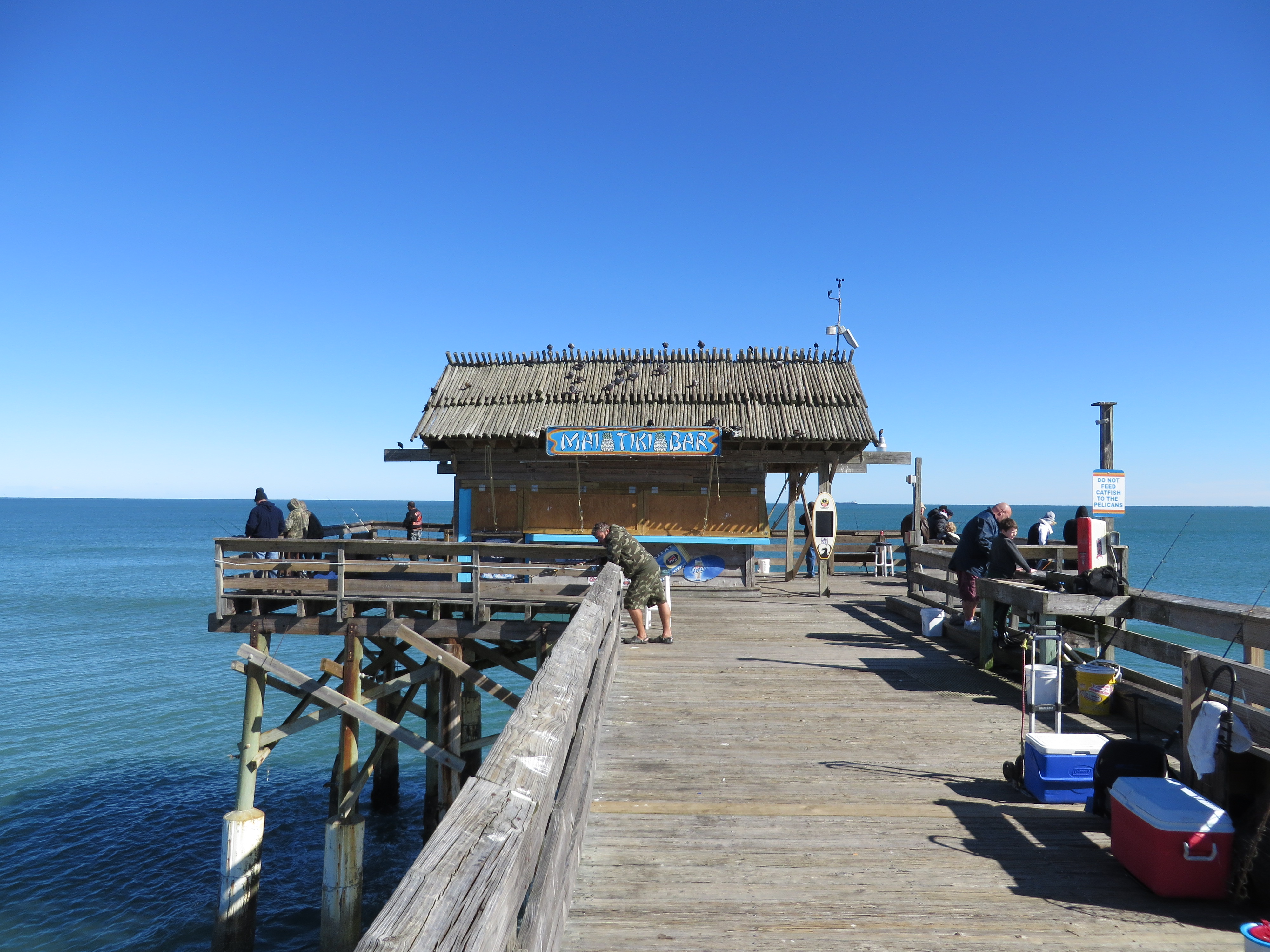
In 2026, the Cocoa Beach Pier operates much as it has for 60 years. The restaurant serves seafood. The tackle shop sells bait. The bar has the same wooden picnic tables that have been there since at least the 1970s. The pier is owned by Cocoa Beach Pier Inc., a Florida LLC controlled by descendants of the Jamieson family who built it.
SpaceX launches are now the pier’s most regular astronaut-era event. Falcon 9 from LC-40 is visible from the pier deck, 12 miles to the northwest. Falcon Heavy from LC-39A is visible 16 miles north. The pier hosts launch-viewing parties on the deck, with the same kind of crowd the Apollo launches drew in the 1960s.
The pier is not on the cape proper. It’s 8 miles south, in Cocoa Beach. But it’s the social hinterland of the cape’s space program. The astronauts went home to the pier. The reporters wrote stories at the pier bar. The local kids surfed under the pier and grew up watching launches over the surf. All of that is still ongoing.
The Cocoa Beach population boom the pier rode
The pier opened in the middle of one of Florida’s sharpest population spikes. Cocoa Beach’s federal census recorded 246 residents in 1950. By 1960 it was 3,475. By 1970 it was 9,952. That is a fortyfold increase in twenty years, driven almost entirely by Air Force and NASA contractor migration into the south cape. Cocoa Beach was the closest beach community to the new launch complexes, and the only one with a meaningful commercial strip on Highway A1A.
The pier opened in 1962, one year after the city’s 1957 reincorporation, into a market that was building hotels faster than it could fill them. The Holiday Inn at the corner of A1A and Minutemen Causeway opened in 1963. The Cape Colony Inn, which Wally Schirra co-owned, opened in 1965. The pier’s walk-up bar served a contractor population that was housing-rich and time-poor, on six-day operational schedules with one night off per week. Friday and Saturday at the pier were standing-room only through every Mercury, Gemini, and early Apollo launch window.
The 1975 unemployment crash
The end of Apollo in 1972 hit Cocoa Beach like a layoff notice. The city’s 1975 unemployment rate reached 14.3 percent, more than double the national average. Several large beachfront motels closed. Some were demolished, some converted to retirement housing. Cocoa Beach lost about a quarter of its non-military workforce between 1972 and 1976.
The pier did not close. Its owners scaled back the restaurant hours, shifted the bar business toward locals and weekend tourists, and held the property through five years of marginal returns. The Easter Surfing Festival, which had been a modest annual event since 1964, became one of the pier’s reliable revenue weekends as surf tourism gradually replaced the lost space-program clientele. By the time the Shuttle program ramped up in 1981, the pier had pivoted to a tourism and surf-event model that no longer depended on cape contractor traffic.
The pier’s survival through that decade is the answer to why it is still standing in 2026 when a half-dozen other 1960s beachfront establishments are not. It diversified before it was forced to.
What the pier teaches about the cape
The cape’s history is usually told through hardware and missions: this rocket on this date, this astronaut to this orbit. The Cocoa Beach Pier reminds you that the launches happened to a community. The community had a bar. The bar saw both the high-status astronaut corps and the low-status surf kids. Both groups were part of the same place. Neither group exists today without the other.
If you visit the cape in 2026 for a launch, you can stand on the pier and watch the rocket clear the horizon. You’ll be standing where John Glenn ate dinner the week of Friendship 7. You’ll be standing where Kelly Slater surfed at 13. The same wooden deck.
Further Reading
As an Amazon Associate we earn from qualifying purchases.