The Cape Canaveral Lighthouse, 1848 to today
The lighthouse the launches grew up around: 1848 brick tower, 1868 iron replacement, 1894 inland move, automated 1967, still operating in 2026.
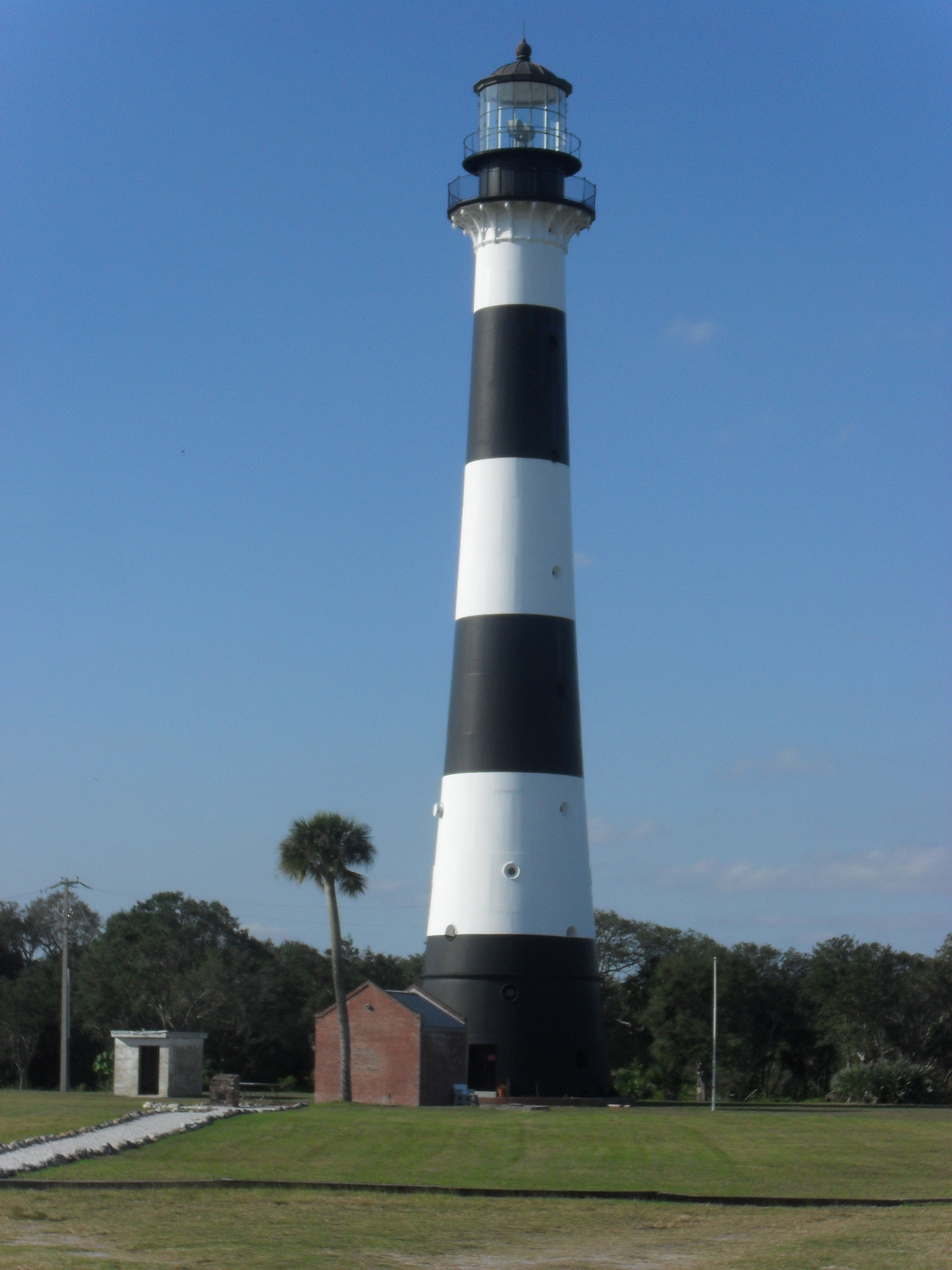
The Cape Canaveral Lighthouse has stood at the cape since 1848. Three structures, two relocations, one continuous mission. The 65-foot brick tower built in 1848 was the original. Confederate forces dismantled the lens at the start of the Civil War. The US Lighthouse Board replaced the brick with a 145-foot iron tower in 1868. Atlantic erosion threatened the iron tower by 1893, so the Light-House Board moved it 1.25 miles inland in 1894. The Coast Guard automated the light in 1967. It still operates as an active aid to navigation in 2026, the only lighthouse located on an active US military launch range.
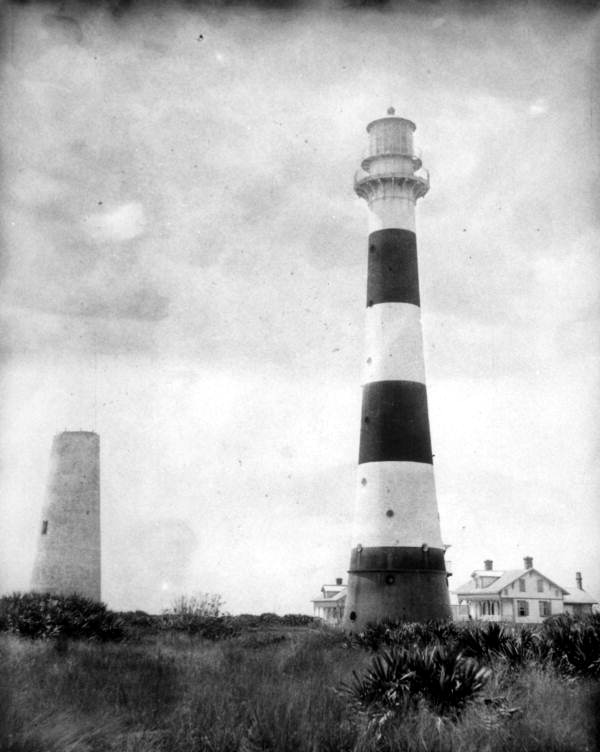
The 1848 brick tower
Winslow Lewis built the original 65-foot brick lighthouse for $12,724 under an 1847 congressional appropriation. The light became operational on May 10, 1848, with 15 lamps and 21-inch reflectors. Mariners complained almost immediately. The light’s range was too short for the offshore shoals that wreck ships off the cape, the Halifax and Indian River sailors said, and a higher tower would save more lives.
The 1850 census recorded Mills Olcott Burnham as the keeper. Burnham held the post for 36 years, until his death in 1886, the longest run of any keeper in the lighthouse’s history. He raised seven children at the station and farmed the surrounding scrubland.
Civil War dismantling and the 1868 iron tower
The Confederate States removed the lens and lighting apparatus on March 31, 1861, days after Florida seceded. They buried the components in an orange grove near the keeper’s quarters. After the war, the apparatus was recovered, but the wooden brick tower was deemed inadequate. Congress appropriated $50,000 in 1867 for a taller iron-plate replacement.
The new 145-foot tower opened on May 10, 1868, exactly 20 years after the original. It was built using cast iron plates manufactured in the North and shipped to the cape. The first-order Fresnel lens, manufactured by Henry-Lepaute in Paris, threw a fixed white light 18 nautical miles. The same lens, restored, is now displayed at the Ponce de Leon Inlet Lighthouse Museum about 80 miles north.
The 1894 inland move
By the late 1880s, the Atlantic was actively eating the dune the lighthouse stood on. The shoreline had moved more than 200 feet west since the tower was built. The Light-House Board concluded in 1892 that the tower would be undermined within a decade if not moved.
The relocation began in 1893. Workers disassembled the iron plates one course at a time, transported them by mule-drawn tramway to a new site 1.25 miles inland, and reassembled the tower on a new brick foundation. The work cost $76,500 and took 18 months. The lamp was re-lit at the new location on July 25, 1894.
The site they chose is now inside the boundary of Cape Canaveral Space Force Station, near Launch Complex 31. It was empty scrub when they picked it. By 1962, it would sit a few hundred yards from rockets.
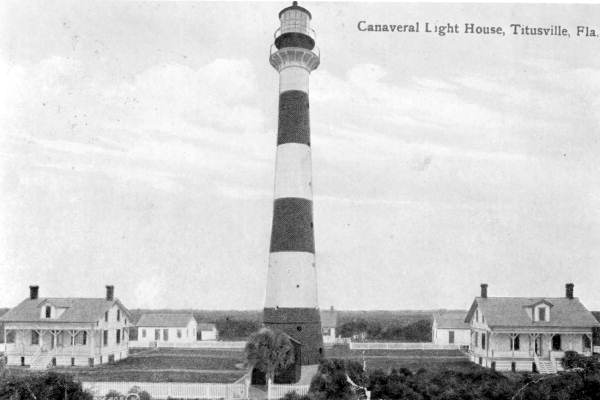
Automation, 1967
Through the first half of the 20th century, the cape lighthouse remained a manned station. Keepers worked rotating shifts, maintained the lens, and operated a fog signal. The Coast Guard had taken over operation from the Lighthouse Service in 1939 when the Lighthouse Service was abolished and absorbed into the Coast Guard.
The Coast Guard installed a DCB-224 rotating beacon in 1967, removed the Fresnel lens, and automated the station. The last keeper left that year. The DCB-224 was replaced in 1993 with a VRB-25 lamp, which is still in service.
The light is officially designated as USCG light list number 25,830. It flashes white every 20 seconds and is visible 24 nautical miles.
The 2007-2008 restoration
By the early 2000s, decades of salt air had eaten into the iron plates. The Lighthouse Foundation, formed in 2002, pushed for a full restoration. The Coast Guard transferred the lighthouse to the Air Force in 2000 under a National Historic Lighthouse Preservation Act conveyance, with the Air Force taking over maintenance.
The 2007-2008 restoration sandblasted the tower down to bare metal, replaced 12 corroded iron plates, and repainted in the original 1894 black-and-white daymark pattern. The work cost about $1.4 million, funded jointly by the Air Force and the Lighthouse Foundation.
The Burnham keepership and the Armed Occupation Act
Mills Olcott Burnham did not arrive at the cape as a paid federal employee. He came under the 1842 Armed Occupation Act, a federal homestead law that granted 160 acres to any able-bodied settler who would hold the Florida frontier for five years. Burnham took his grant near the lighthouse, then took the keeper job when the previous keeper resigned. He combined the two roles for more than three decades, farming his Armed Occupation parcel and tending the light in the same workday.
His tenure spanned a period when keeper turnover at remote Florida stations averaged under five years. Burnham held it through the Civil War dismantling, the 1868 rebuild, and most of the difficulties leading up to the 1894 inland move. He died at the station in 1886. His daughter Mary married James Knight, who took over keeping briefly, before the post passed to other families. The Burnham name still attaches to a road on what is now Cape Canaveral Space Force Station.
The 1893 temporary tower
The 1893-1894 relocation is sometimes described as if the iron tower went dark for the duration. It did not. The Light-House Board erected a 55-foot temporary skeletal lighthouse on a separate footing while the main tower was disassembled, transported, and reassembled. The temporary light kept the cape’s offshore approaches lit for the 18-month transition.
The original 1848 brick tower did not survive. After the iron tower opened in 1868, the brick lighthouse sat idle. When the inland move began, the Light-House Board demolished the brick structure and used its rubble in the new foundation under the iron tower. The 1848 tower exists today only as broken brick under the 1894 base.
The 1931 electrification and the 1993 lens removal
Two technology changeovers reshaped the station before automation. In 1931, the Coast Guard installed an electric motor to drive the lens’s clockwork rotation, replacing the weight-and-pulley mechanism the keepers had wound by hand for 63 years. The change cut keeper workload sharply, though the station remained manned for another 36 years.
The 1967 automation did not remove the Henry-Lepaute Fresnel lens. The Coast Guard kept the first-order lens in operation alongside the new rotating beacon for another quarter century. By the early 1990s, ground vibration from Titan IV and Delta II launches less than two miles away had cracked several lens prisms. The Coast Guard removed the Fresnel lens in 1993 and installed a DCB-224 aerobeacon in its place. The lens went to the Ponce de Leon Inlet Lighthouse Museum for display and is restored as of 2026.
The lighthouse now
The Cape Canaveral Lighthouse is the only lighthouse inside an active US military launch range. Public access is restricted. The Lighthouse Foundation runs occasional tours by reservation, escorted by Space Launch Delta 45 security. The tours sell out within hours of being announced.
It is also the lighthouse whose footprint best frames every Falcon 9 launch from LC-40 and every Atlas V from LC-41. Time-lapse photographers position cameras to catch the rocket exhaust passing behind or beside the tower. The result is a recurring tableau: an 1894 iron lighthouse and a 21st-century launch vehicle in one frame.
That juxtaposition is the cape in a single image. The light came first. The rockets joined it. Both are still working.
Further Reading
As an Amazon Associate we earn from qualifying purchases.