The Ais at the cape and the Spanish, 1565 to 1763
Before the lighthouse, before the rocket range, the cape was Ais territory. The Spanish met them, fought them, and watched the population collapse within two centuries.
The Ais lived along the Atlantic coast of what’s now Brevard County for at least a thousand years before Spanish contact. Their territory stretched from roughly Cape Canaveral south to the St. Lucie Inlet, centered on the Indian River Lagoon. They fished, gathered, ran a salvage economy off Spanish shipwrecks, and resisted Spanish missionary efforts for nearly two centuries. By the time Spain ceded Florida to Britain in 1763, the Ais were effectively extinct as a distinct people, killed off by smallpox, slave-raiding by British-allied Creek bands, and the slow collapse of the lagoon ecology they depended on.
What we know about them
The Ais (pronounced “ah-eece,” sometimes spelled Ays, Aiz, or Jece in Spanish records) were not part of the better-documented Timucua to the north or the Calusa to the south. They spoke a distinct language for which only a handful of words survive. They were primarily hunter-gatherers, not maize farmers, because the cape’s sandy soils and salt marshes don’t support corn.
Spanish records from the 1565 to 1700 period describe Ais settlements of 50 to 200 people along the lagoon. The largest was the village the Spanish called Ays, on the Indian River south of present-day Sebastian Inlet. Smaller settlements dotted the coast north into what’s now Cape Canaveral.
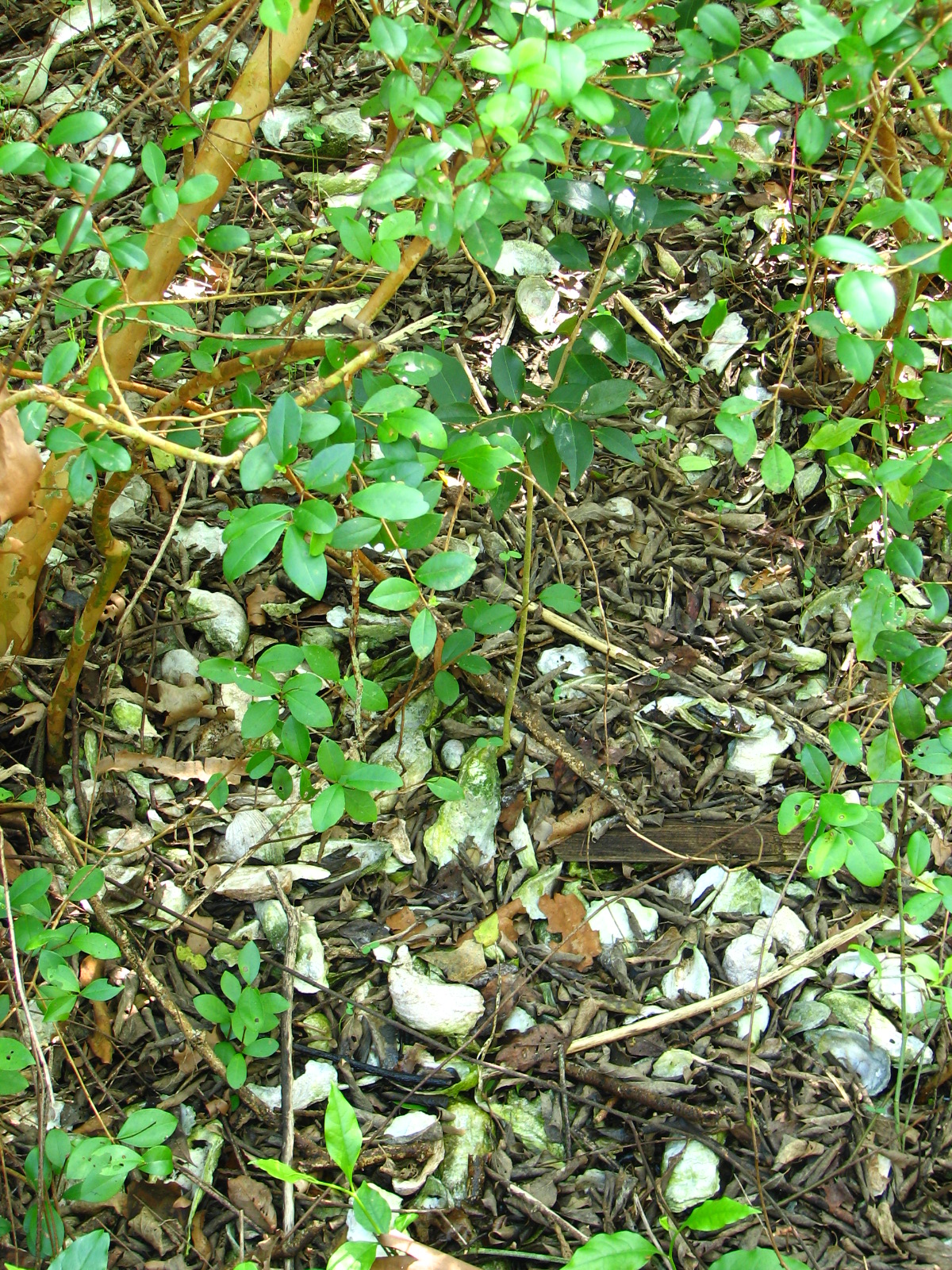
The archaeology backs this up. Midden sites along the lagoon contain oyster shell, fish bone, deer bone, and occasional Spanish ceramics traded or salvaged. Florida Public Archaeology Network surveys have identified Ais-period middens at the cape, on Merritt Island, and along the Banana River. Most are buried under modern development or sit on restricted military land.
Pedro Menéndez and the 1565 encounter
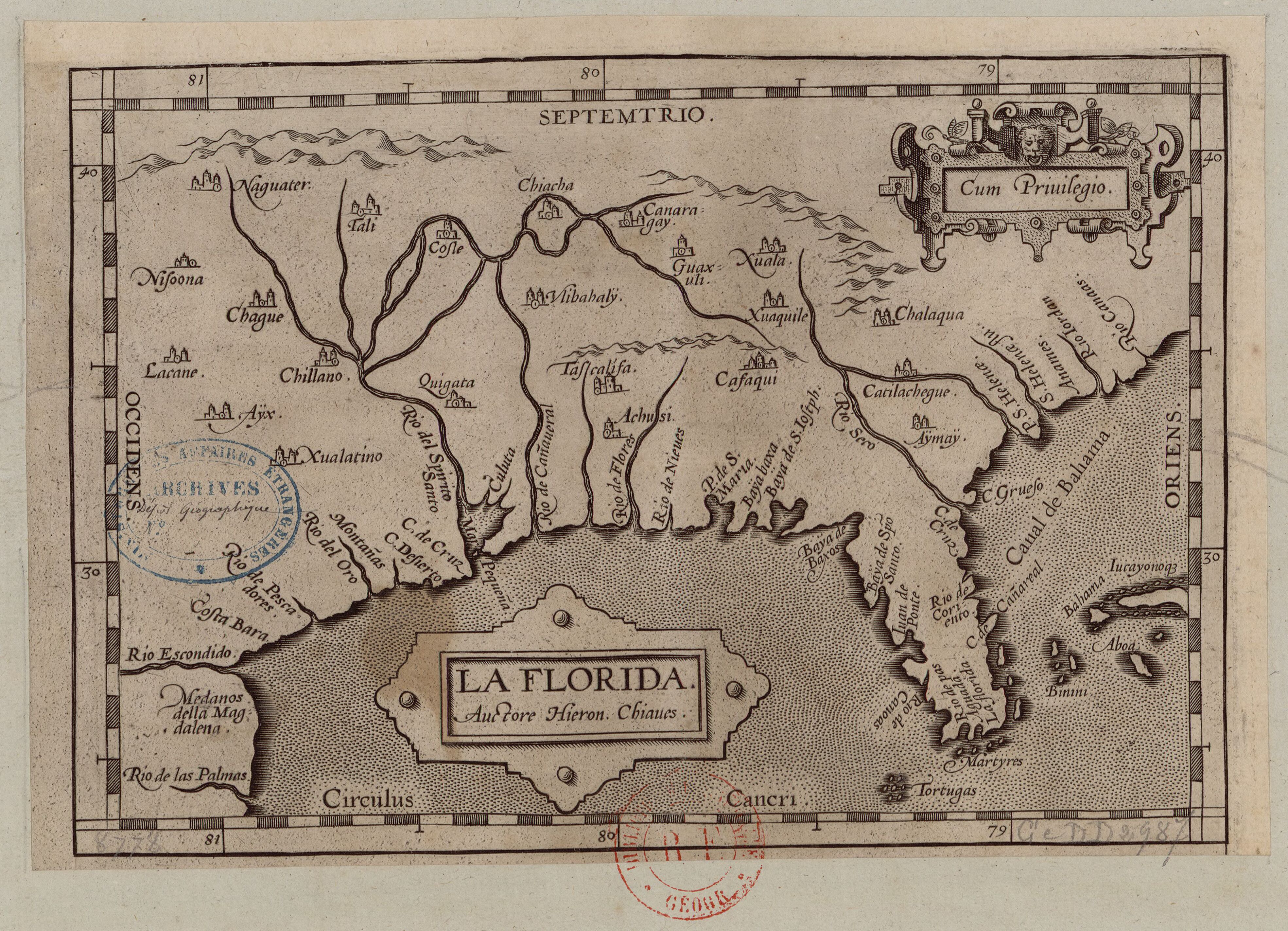
Pedro Menéndez de Avilés founded St. Augustine in September 1565 and immediately began trying to extend Spanish authority south along the coast. He met the Ais in late 1565 or early 1566. The encounter was not friendly.
Menéndez’s chaplain, Father Francisco López de Mendoza Grajales, recorded that the Ais cacique refused to swear loyalty to the Spanish crown and made no effort to hide his contempt. The Ais had probably already raided several Spanish shipwrecks along the coast and were not about to surrender that revenue stream.
The cape sat near the northern edge of Ais territory. Spanish galleons running the Gulf Stream wrecked on the offshore reefs with grim regularity. The Ais salvaged everything they could: silver coin, iron, fabric, ironwork, occasionally hostages. The Spanish considered this piracy. The Ais considered it tribute paid by the sea.
Failed missions
Spanish Jesuits attempted to establish a mission among the Ais in 1568. It failed within a year. The Franciscans tried again in the 1590s, with no more success. Where missions succeeded among the Timucua to the north and the Apalachee to the west, the Ais simply refused to participate. The Spanish never built a permanent presence on the cape.
This was unusual. Most Florida groups eventually accepted some missionization in exchange for trade goods and military protection. The Ais didn’t. The likely reason: shipwreck salvage made them economically independent in a way other Florida groups were not. They didn’t need Spanish trade because the Atlantic provided it.
The collapse, 1700 to 1763
The Ais survived the 16th and most of the 17th centuries with their territory and economy intact. The collapse came suddenly in the early 1700s.
Three forces converged. Smallpox arrived for the first time around 1700, brought by Spanish coastal patrols and shipwreck survivors. Native populations with no immunity died at rates of 50 to 90 percent. Then came the slave raids. Beginning around 1703, English-allied Creek raiders from what’s now Georgia and Alabama swept south through Florida, taking captives to sell to South Carolina plantations. The Ais, undefended by any Spanish garrison, were prime targets.
The third force was ecological. Increased Spanish and British shipping along the coast disrupted the inshore fisheries the Ais depended on. By the 1740s, the surviving Ais population had moved south to Cuba or west to mix with other groups. When Spain ceded Florida to Britain in 1763 under the Treaty of Paris, the few remaining Ais families went with the Spanish to Havana.
Within a single generation, a culture that had occupied the cape for at least a thousand years was gone.
The Jonathan Dickinson account, 1696
The fullest single account of Ais life comes from a Quaker merchant who did not write it on purpose. Jonathan Dickinson, his wife Mary, their infant son, and the rest of a small Philadelphia-bound party were shipwrecked on Jupiter Island in September 1696 when their barque Reformation grounded in a storm. The survivors walked north along the coast and spent more than two months in Ais hands before being escorted to St. Augustine.
Dickinson’s journal, published in 1699 under the title God’s Protecting Providence, records ethnographic detail that no Spanish source matched. He noted that the Ais grew nothing: “they neither sow nor plant any manner of thing whatsoever.” Their diet was fish, shellfish, palmetto berries, cocoplum, sea grape, and meat from deer and small game when hunting was good. He described the chief of Jece as paramount to all the lagoon’s towns, with subordinate caciques in smaller settlements.
The journal is the only first-hand European description of an Ais settlement at peace. Dickinson and his party were not killed because the Ais judged them more valuable as ransom than as captives. The episode that ended their stay was the arrival of Spanish soldiers from St. Augustine, who escorted the party north. Dickinson’s wife and their child survived. He returned to Philadelphia, prospered as a merchant, and was elected mayor in 1712 and 1717.
The 1711 population census
Spanish administrative records held by the Archivo General de Indias in Seville include a 1711 census of native populations remaining under Spanish authority in eastern Florida. The Ais are recorded at 137 individuals across the surviving settlements. That figure represents perhaps three percent of the population the same coast had supported a century earlier. By 1711 the slave raids had been running for eight years, smallpox had passed through twice, and the chiefdom’s central organization had collapsed.
The remaining Ais are recorded merging into the Costas tribe after about 1703 and disappearing as a named group from Spanish records by 1760. The handful who survived to the 1763 Treaty of Paris went with the Spanish to Cuba. None returned.
What survived
The Ais left middens. They left a few placenames recorded in Spanish maps. They left, faintly, the shape of the trail network the cape’s later residents used, which followed Ais hunting paths. They left nothing in the historical record that could be called a voice.
The cape lighthouse keepers in the 1850s reported finding Ais pottery, shell tools, and human burials when digging foundations. The Apollo-era launch complex construction in the 1960s exposed more sites. Most were destroyed without survey. A few were photographed and the material catalogued at the Florida Museum of Natural History.
What remains in the public record is sparse: a Spanish chaplain’s complaint that the cacique wouldn’t kneel, a 1727 inventory of slave-raid captives that lists “two Ays children” sold in Charleston, a 1763 Cuban census showing 17 Florida natives arriving with the Spanish withdrawal. That’s most of what we have for a people who lived at the cape longer than the United States has existed.
It deserves naming.
Further Reading
As an Amazon Associate we earn from qualifying purchases.