The 1990s lull and the Space Florida era : the cape's lean decade
After Apollo and before SpaceX, the cape ran on Shuttle operations and not much else. The 1990s and 2000s were a lean economic period that nearly broke the local launch industry.
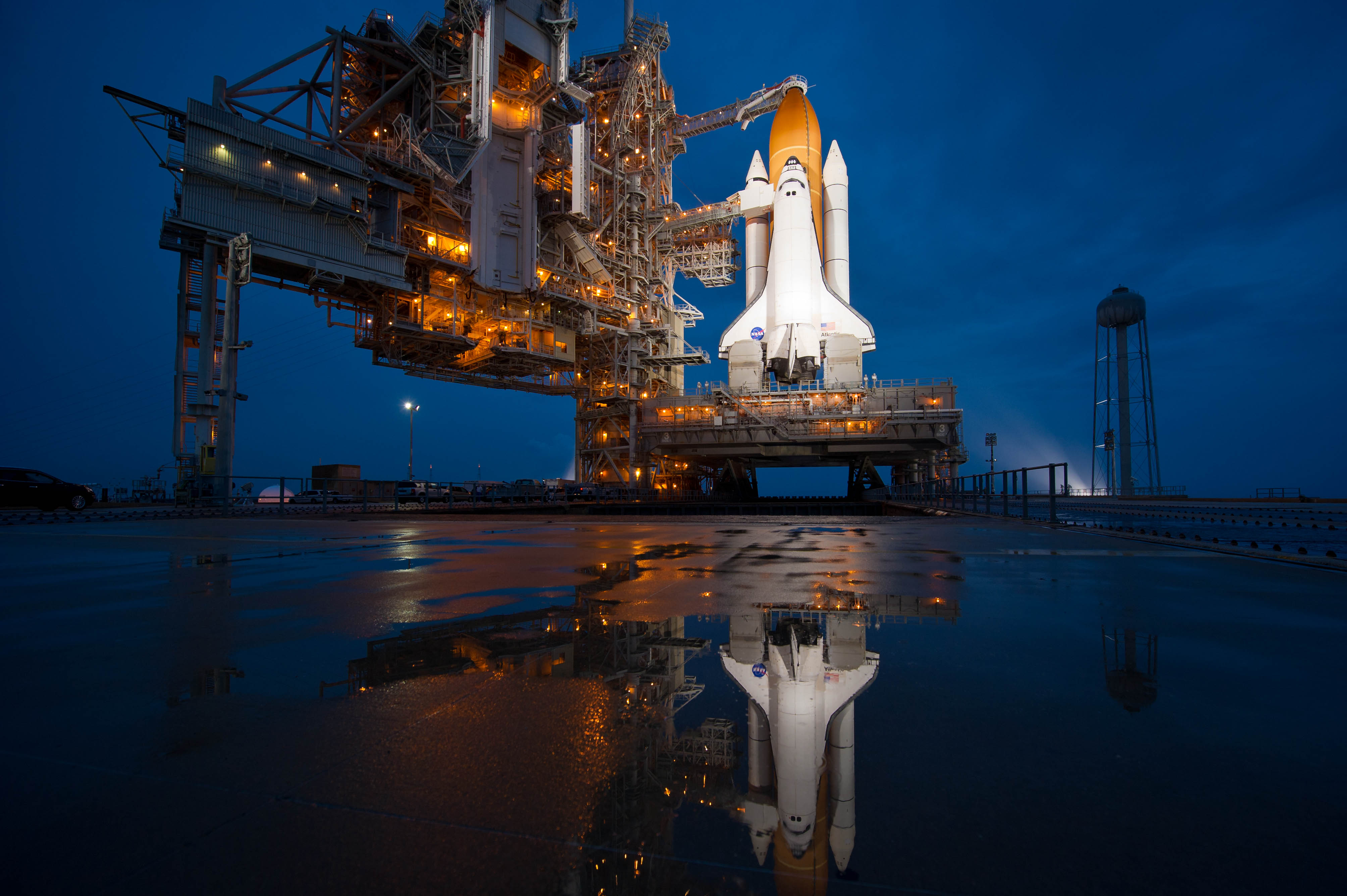
The 1990s and 2000s were the cape’s lean decade. After Apollo ended in 1972 and Shuttle operations stabilized at four to seven launches per year through the 1990s, the cape’s economy contracted significantly. Brevard County’s space-industry workforce dropped from about 26,000 at the Apollo peak to about 14,000 by 1990. The drop continued through the 2000s. The state of Florida created Space Florida in 2006 as a public agency specifically tasked with diversifying and expanding the cape’s launch industry beyond NASA’s Shuttle program. The strategy was to court commercial launch operators, attract aerospace manufacturing, and reduce the cape’s single-program dependency. The strategy partially worked. The recovery came primarily from SpaceX and Blue Origin in the 2010s, not from Space Florida’s direct investments, but Space Florida helped create the regulatory and economic framework that made the commercial transition possible.
The economic facts
Brevard County’s space-industry employment by year:
- 1969 (Apollo peak): about 26,000
- 1980 (Shuttle ramp-up): about 19,000
- 1990: about 14,000
- 2000: about 12,500
- 2010 (Shuttle wind-down): about 13,500
- 2014 (post-Shuttle bottom): about 7,500
- 2024 (commercial recovery): about 15,000
The 2014 bottom was sharp. The Shuttle program had directly employed about 8,000 workers in Brevard County. Their layoffs in 2010-2012 caused the largest single-decade employment drop in the cape’s history. Median home prices in Titusville dropped 35 percent between 2008 and 2012, partially due to the broader housing crash but largely due to the workforce contraction.
The cape’s communities (Cocoa Beach, City of Cape Canaveral, Titusville, Port St. John, Merritt Island) all suffered economically through this period. Hotels closed. Restaurants closed. Local schools lost enrollment. The Indian River Lagoon’s environmental decline accelerated as state environmental funding for cape-area waters got cut.
The Shuttle limitations
The Shuttle program was the cape’s economic backbone but provided a limited launch rate. The Shuttle flew an average of 4.5 missions per year over its 30-year operational life. By comparison, the cape in 1966 hosted 31 launches (Gemini + various uncrewed). The Shuttle’s complexity and the post-Challenger and post-Columbia stand-downs kept the operational tempo low.
This low tempo meant the cape’s infrastructure was underutilized. The Eastern Range, the propellant depots, the range-safety systems, the support contractors all had capacity for more launches than the Shuttle alone provided. The cape’s economy was, in effect, oversized for the actual launch activity it supported.
In a normal market, the cape would have either contracted to match the actual workload or attracted additional customers to fill the capacity. Through the 1990s and most of the 2000s, neither happened. The cape’s federal facilities (Patrick AFB, KSC, CCAFS) operated at well below their physical capacity, and the contractor workforce got cut to match.
The unsuccessful diversification attempts
The cape’s leadership tried multiple times in the 1990s and 2000s to attract additional launch customers. The attempts mostly failed.
The Soviet-era Russian space industry, after the 1991 collapse, was theoretically a potential customer. Several Brevard County and state-level proposals to launch Russian Proton or Zenit boosters from Cape Canaveral were discussed in the 1990s. None happened, primarily due to US export-control concerns and competing Russian launch site capabilities.
Israeli, Indian, and Japanese commercial launch operations were also discussed at various points. The cape’s geographic advantages (latitude, Atlantic range) were competitive against those countries’ domestic launch sites. The political and trade-policy complications were prohibitive.
US commercial operators in the 1990s and 2000s (primarily Lockheed Martin Astronautics, with the Atlas series, and McDonnell Douglas / Boeing with the Delta series) used the cape steadily but at low volumes. The combined Atlas/Delta launches added 6 to 8 missions per year during peak periods. This was not enough to materially change the cape’s economic situation.
Space Florida’s creation
Space Florida was created by the Florida Legislature in 2006 (Chapter 2006-60, Laws of Florida) as a public-private hybrid agency. The agency’s mission was to “facilitate, advocate, finance, and grow the aerospace industry in Florida.” The agency reported to the Florida governor and had a board of directors appointed by the governor and the legislature.
Space Florida’s initial funding was modest: about $11 million in annual state appropriations during its first decade. The agency’s main tools were:
- Tax incentives for aerospace companies relocating to or expanding in Florida
- Workforce-training grants
- Infrastructure investment (the agency built or operated several aerospace-related facilities at the cape and inland)
- Marketing and recruitment of commercial launch operators
The agency’s early focus was on attracting commercial launch customers. The first major win was the 2006 announcement that SpaceX would establish a launch operation at Cape Canaveral. The second was Boeing’s 2010 announcement of the X-37B operations at the cape. Both happened with significant Space Florida and Brevard County involvement.
The X-37B program
The X-37B Orbital Test Vehicle, an unmanned reusable spaceplane operated by the US Space Force (formerly Air Force), began flight operations from Cape Canaveral in 2010. The vehicle is launched from the cape on Atlas V or Falcon 9 boosters, performs classified missions in orbit, and lands at either Vandenberg or the Shuttle Landing Facility at KSC.
The program is classified, so public information is limited. What is public: six X-37B missions have flown as of early 2025, with durations ranging from 224 days (OTV-1, 2010-2011) to 908 days (OTV-6, 2020-2022). The missions appear to be technology demonstration and reconnaissance.
The program brings some cape activity (launches, landings, support operations) that would not have existed otherwise. The economic value is modest but real.
The commercial inflection
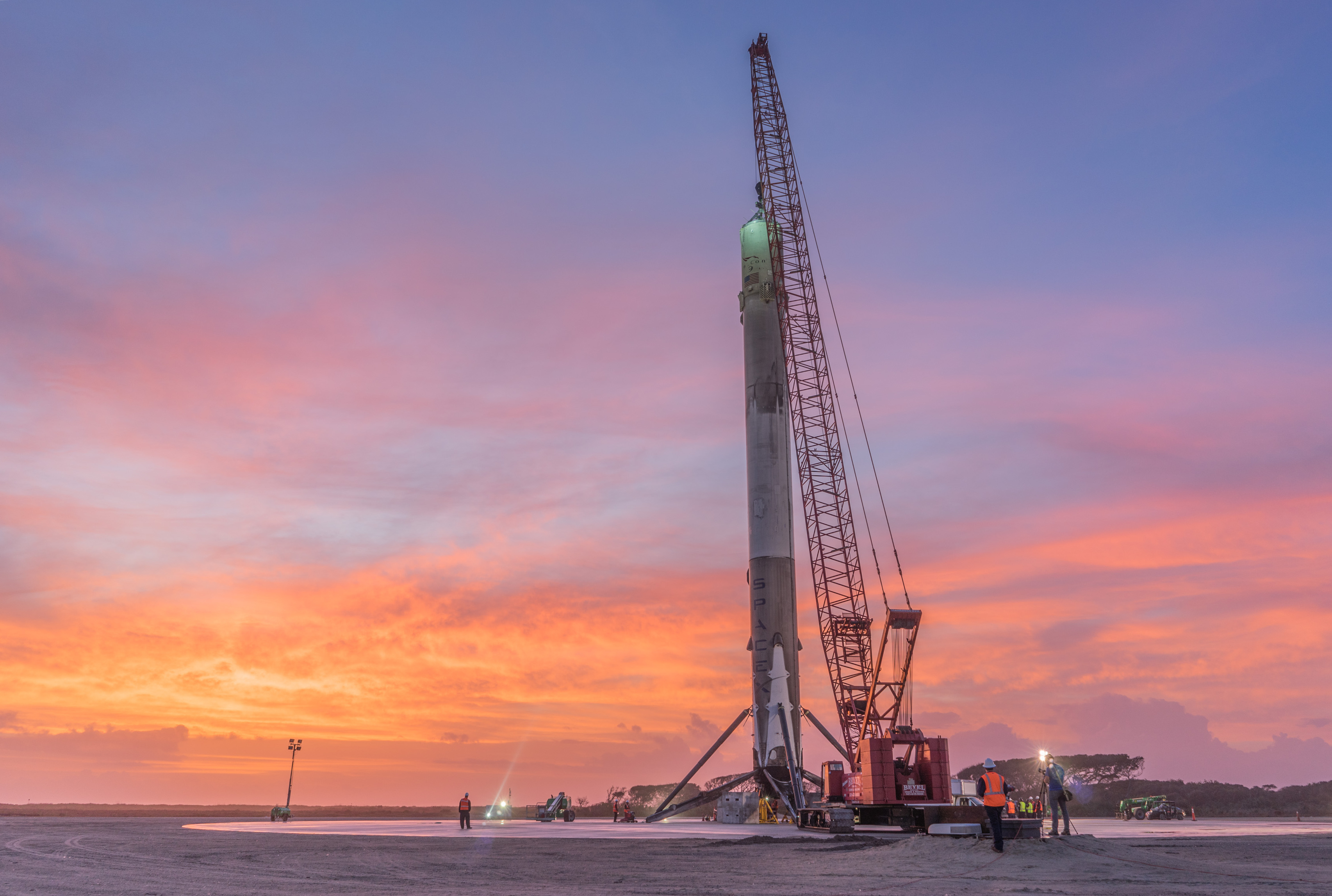
The cape’s real economic recovery came from SpaceX, not from Space Florida’s programs. SpaceX began Falcon 9 flights from Cape Canaveral LC-40 in June 2010. The first flight was a test mission. The first operational flight was December 2010 (the COTS-1 demonstration).
SpaceX’s cadence grew rapidly:
- 2010-2014: 1 to 6 launches per year (test and development)
- 2015-2018: 7 to 21 launches per year (commercial cadence)
- 2019-2024: 22 to 92 launches per year (Starlink deployment driving high tempo)
- 2025: projected approximately 100 launches from Cape Canaveral
The economic effect on the cape was significant. SpaceX employs about 2,500 to 3,000 people in Brevard County as of 2025. Blue Origin, which began cape operations in 2017, employs another 1,200 to 1,500. ULA, which inherited the legacy Atlas and Delta production, employs about 800. Several smaller commercial operators (Sierra Space, Relativity, etc.) employ several hundred more.
The combined commercial space workforce in Brevard County exceeded the legacy NASA Shuttle workforce by 2020 and is on track to exceed the historical Apollo peak by 2030.
What Space Florida actually did
The agency’s direct measurable contributions to the cape’s recovery are:
- Infrastructure investment: about $500 million in cape-area aerospace infrastructure between 2006 and 2024
- Workforce training: about 8,000 people trained in aerospace skills since 2010
- Tax incentives: about $300 million in cumulative tax credits to aerospace companies
- Pad operations support for non-SpaceX, non-ULA operators (the Shuttle Landing Facility was transferred from NASA to Space Florida in 2015 for commercial operations)
The agency’s role in the commercial recovery was supportive rather than decisive. SpaceX would have come to the cape with or without Space Florida. The agency made the cape’s logistics easier. It did not cause the recovery.
The lesson
The 1990s and 2000s taught the cape an important lesson: single-program dependency is fragile. When the dominant launch program (Shuttle) ran at low capacity, the entire local economy contracted. The diversification strategy that emerged from the lean decade (cultivate multiple commercial operators, build supporting infrastructure, avoid betting the region on any single NASA program) has proven correct.
The cape in 2026 is more diversified than it has ever been. NASA’s Artemis program, the Space Force’s national security launches, SpaceX’s Starlink and commercial cadence, Blue Origin’s New Glenn, ULA’s Vulcan, and the smaller commercial operators all share the same range. If any single program contracts (and one will, eventually), the others will continue.
The 1990s lull was painful. The post-Shuttle 2010s near-crisis was painful. But the cape’s economy is now structurally healthier than it was during the Apollo peak. Twenty-six thousand workers depending on one program was riskier than 15,000 workers depending on five programs.
The cape learned the hard way. It learned.
Further Reading
As an Amazon Associate we earn from qualifying purchases.